Estimated reading time: 7 minutes
Key Takeaways
- Manus is a fully autonomous artificial intelligence agent, designed to plan, execute, and deliver complete projects without constant human involvement.
- It operates in its own dedicated virtual environment with internet access, persistent file storage, and the ability to add custom tools.
- Access is invite-only; the launch stirred massive interest and a waitlist of 2 million people.
- Combines models like Claude and Qwen with advanced browser automation and offers integration through Telegram.
- Stands out from solutions such as OpenAI Astra and Google AI Studio for its focus on true autonomy and end-to-end product delivery.
Table of Contents
What is Manus?
Manus is the artificial intelligence agent that’s been making headlines in recent months. Developed by Butterfly Effect Pte. Ltd.—founded in China and based in Singapore—Manus is promoted as far more than a chatbot: it’s a “virtual colleague” running in its own isolated virtual operating system, much like having a remote professional working for you around the clock, without a break.
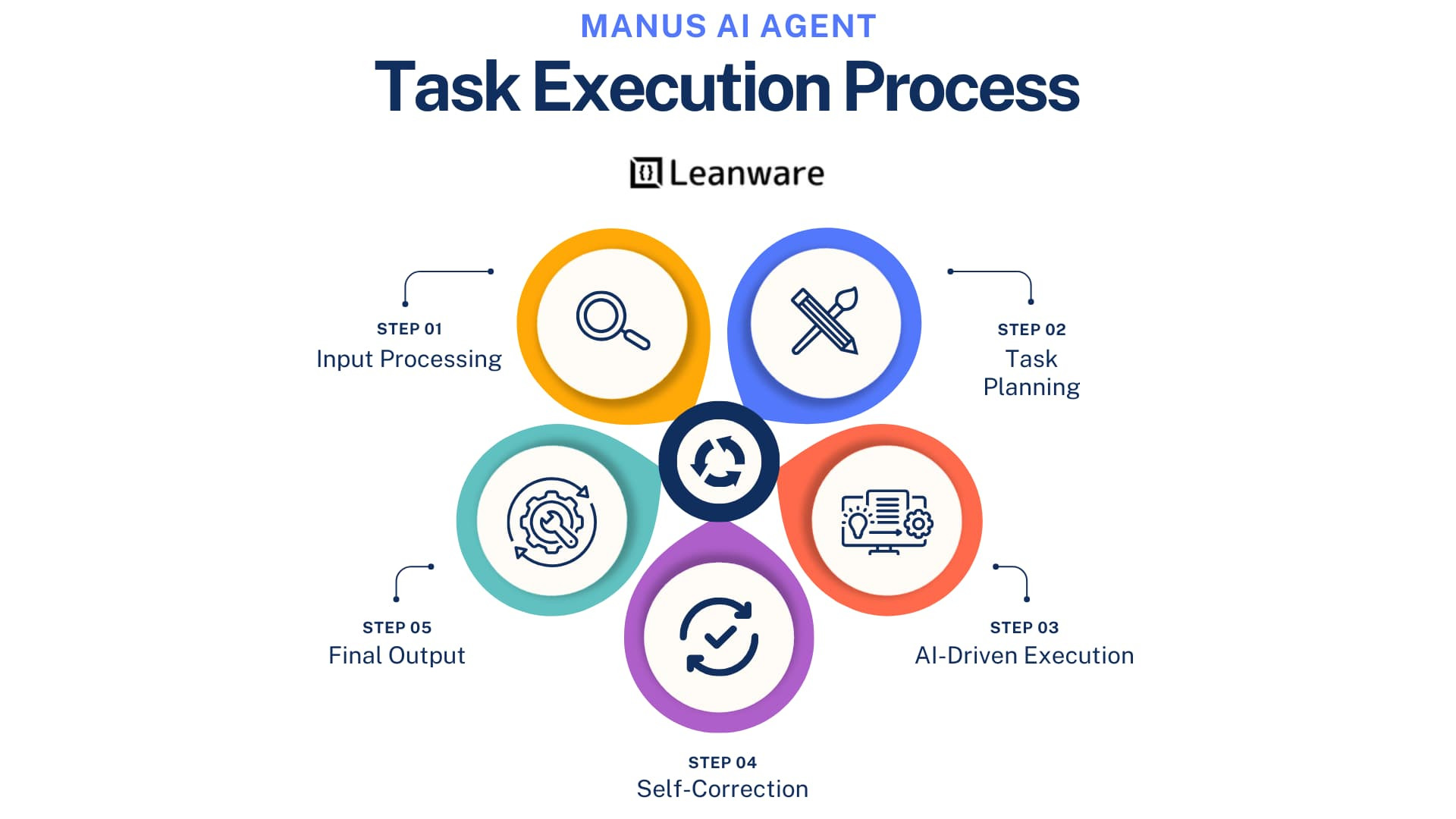
What sets Manus apart is not just its ability to process information and generate responses, but also its capability to plan, manage files, browse the web, install software, and create production-ready deliverables—all from simple user instructions.
The system is not open to the public: Manus limits access via invitation codes, and the waiting list exceeded two million signups just days after its official release on March 6, 2025.
Examples of what it can produce include presentations, PDF files, websites, images, and media resources, with seamless sharing through platforms like Telegram for instant messaging.
Main Features
- Runs inside a fully isolated virtual machine with persistent file storage and ability to install additional software.
- Combines leading models like Claude (Anthropic) and Qwen (Alibaba) for cognition and automation.
- Features browser automation and various internal tools to independently handle complex tasks.
- Works asynchronously and in the cloud, enabling it to start and finish tasks from a single instruction from the user.
- Offers integration with Telegram and other messaging systems, extending its communication and real-time notification capabilities.
See the official documentation and Google AI Studio for comparisons with other emerging platforms. - Available for macOS, Windows, iOS, and Android, although every download requires an active invitation.
- Produces finished products: everything from presentations to websites, graphics, and PDFs.
Limitations & Reactions
While Manus has been praised as a major leap forward in AI agent autonomy, the response has not been universally positive. Some users have raised concerns about its reliability and the cost of access—particularly due to the closed invite structure and the price of codes on secondary markets.
Nevertheless, on a technical level, Manus has delivered outstanding results in GAIA benchmarks, where it’s recognized for turning human intention into concrete actions and real products. Manus aims to stand apart from traditional assistants or chatbots—not just answering questions, but actually carrying out real-world work.
It’s designed to serve both professional and personal needs, with use cases spanning research, report generation, file automation, and creative tasks.
For a look at competing cutting-edge autonomous agents, see the OpenAI Astra review, which also targets autonomous execution of technical and creative work.
Comparisons & Context
What truly sets Manus apart, according to the company and its early users, is the mix of planning, reasoning, browser use, and file creation/management in a single autonomous workflow. Step-by-step human supervision isn’t needed—Manus solves problems and delivers finished results on its own.
Although other offerings like OpenAI Astra and Google AI Studio are moving quickly, Manus is marketed (at least by its creators) as the world’s “first general AI agent.”
That said, more independent testing is still needed to confirm its consistency and robustness in production settings.
The future of autonomous artificial intelligence agents is unfolding rapidly, and Manus is arguably the most advanced and talked-about example today.
Frequently Asked Questions
-
How is Manus different from a regular chatbot?
Manus doesn’t just reply—it can independently execute complex tasks, create files, and deliver real outputs on its own, with no step-by-step user intervention. -
How do you get access to Manus?
Access is by invitation code only; the waitlist currently has over two million people. -
What kinds of work can Manus deliver?
Everything from presentations to PDF files, images, websites, and more—including instant messaging integration like Telegram. -
Who develops Manus?
Butterfly Effect Pte. Ltd., a company based in Singapore and originally founded in China.
4 Responses